Python lists
Mastering Python Lists: Complete Beginner’s Guide with Code & Explanations Python lists create ordered, changeable collections using square brackets [] , holding items like numbers, strings, or nested lists with zero-based indexing . They allow duplicates, resize automatically, and form the backbone for data handling in loops, functions, and beginner projects like score trackers or games.
Creating Lists: Step-by-Step Lists initialize in three main ways, each suited to different scenarios.
Explanation: Literals suit static data; constructors transform inputs; comprehensions replace for loops for cleaner code, running faster on large datasets
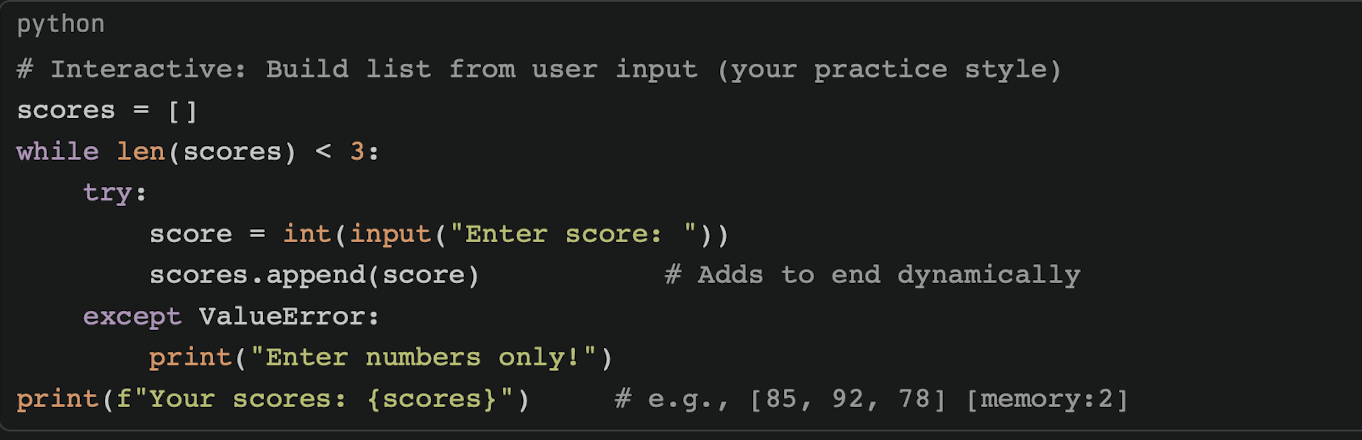
Explanation: while len(scores) < 3 checks list length; append() grows it; try-except handles invalid inputs safely .
Accessing & Slicing: Precision Navigation
Lists index from 0 (first item) or -1 (last item backward).
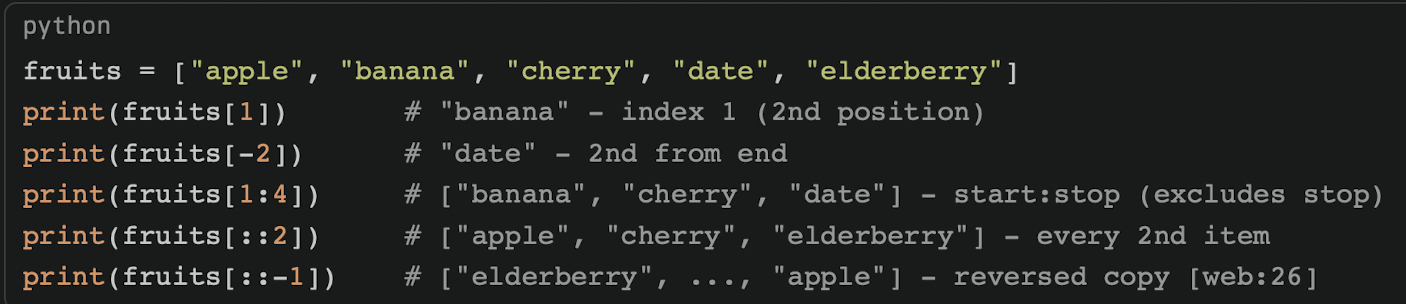
Explanation: Slicing start:stop:step creates views without changing original; omit values for defaults ( : copies whole list); negatives wrap around efficiently .
Modifying Lists: Dynamic Updates
Lists mutate directly—no new list needed.
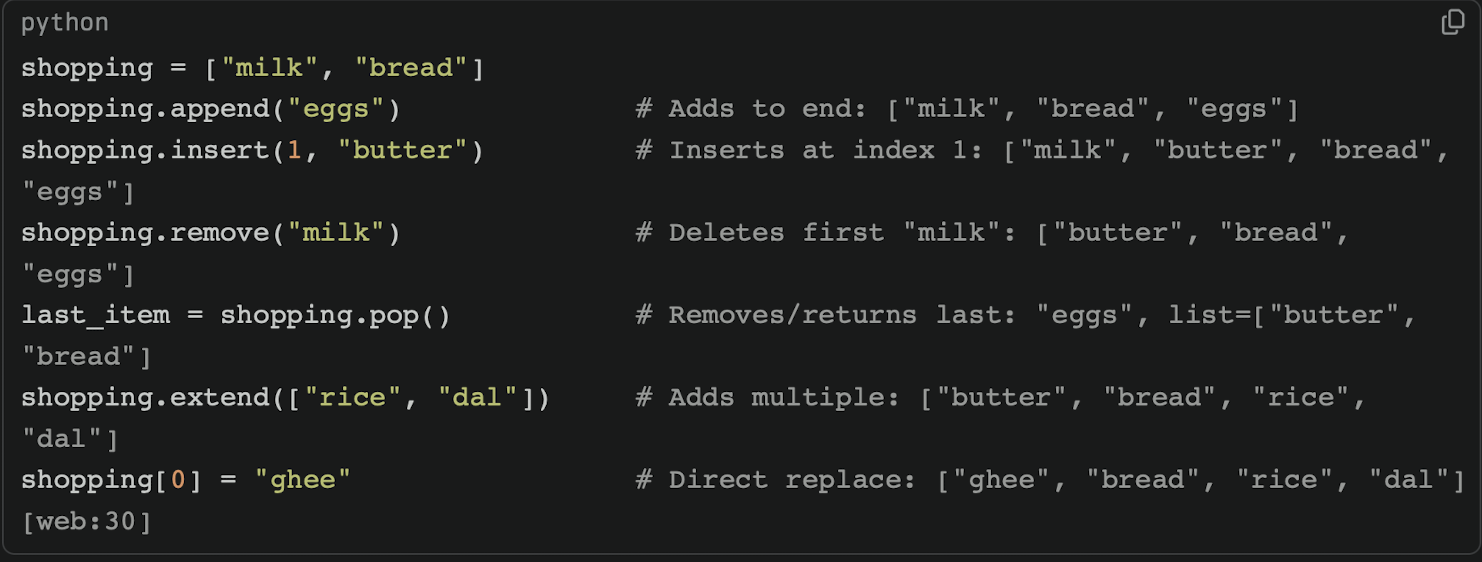
Explanation: append/extend grow; insert/pop/remove edit precisely; pop() returns value for reuse; direct assignment listi=value fastest for single changes .
Iterating & Analyzing: Processing Data
Combine with loops/functions for power.
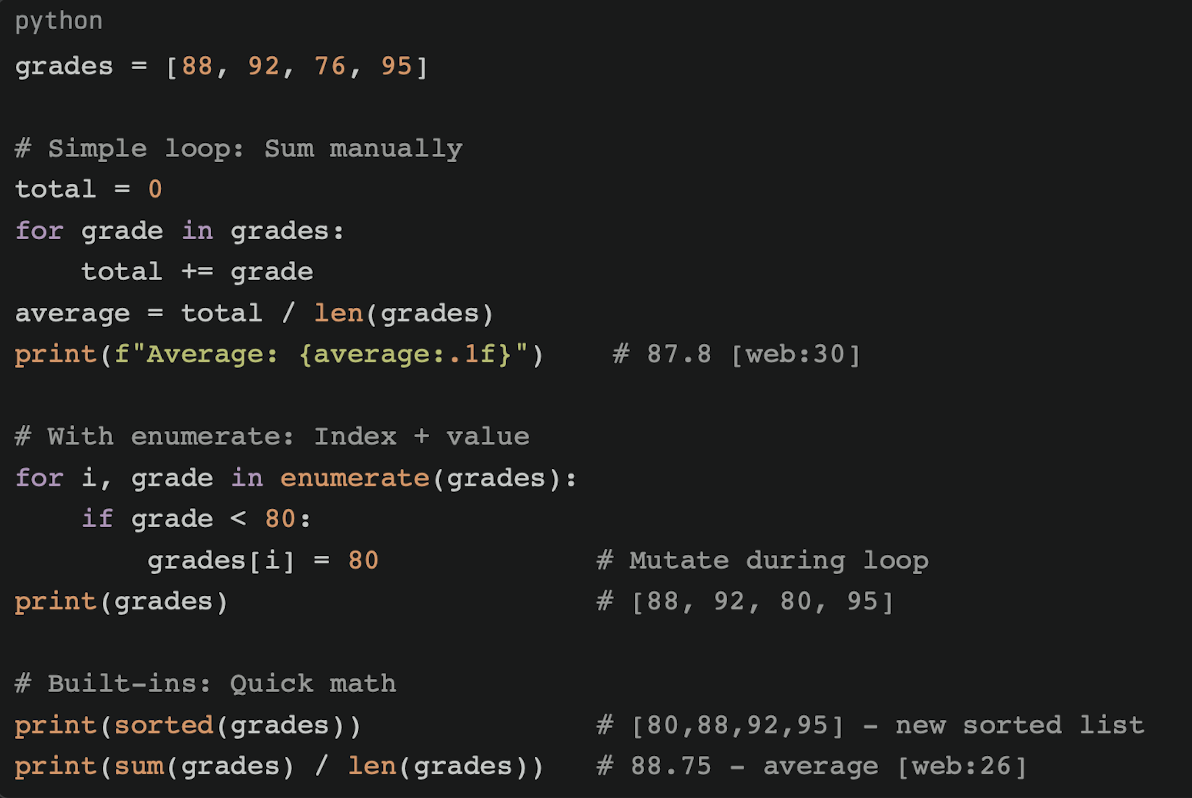
Explanation: for item in list iterates values; enumerate() adds indices; built-ins like sum() , sorted() optimize common tasks without loops .
Advanced: Functions, Comprehensions & Copies
Elevate with reusable code.
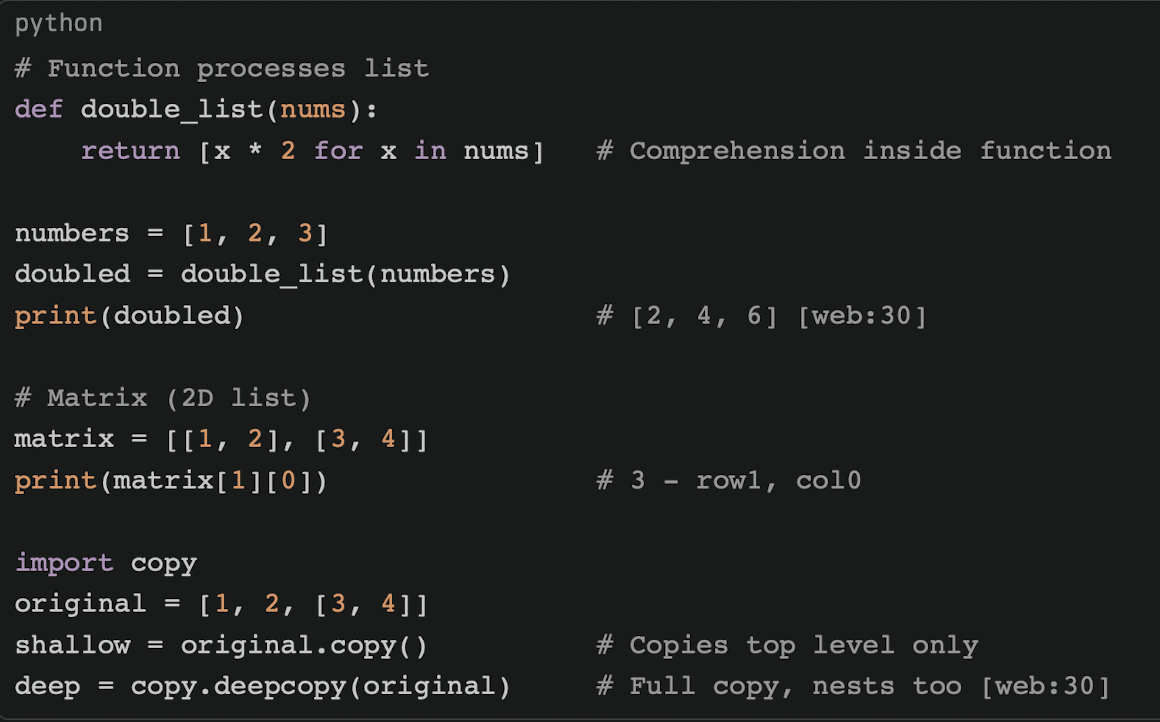
Explanation: Functions encapsulate logic; comprehensions transform inline; shallow copies share nested objects (mutate together); deep copies independent.
SOME PROGRAMS BASED ON LISTS:
1. Fibonacci List
The Fibonacci list idea means: start with and keep appending the sum of the last two numbers until the list has 10 elements.
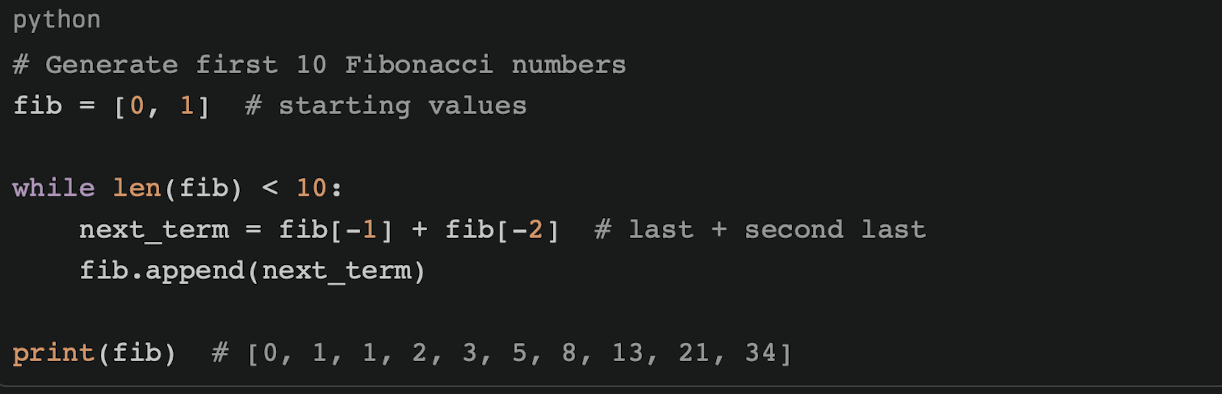
Explanation:
• fib is the last element, fib is the second last.
Len(fib) < 10 stops when there are 10 elements.
2. Pascal Row (One Row of Pascal’s Triangle)
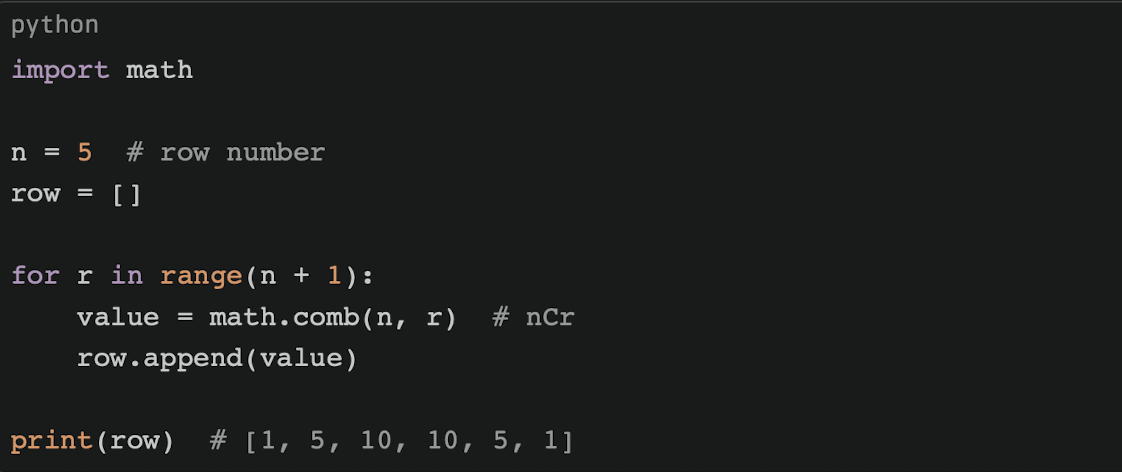
Example: build a specific row, say row 5:
. Method 1: Using mathematics (nCr)
.Method 2: Build next row from previous
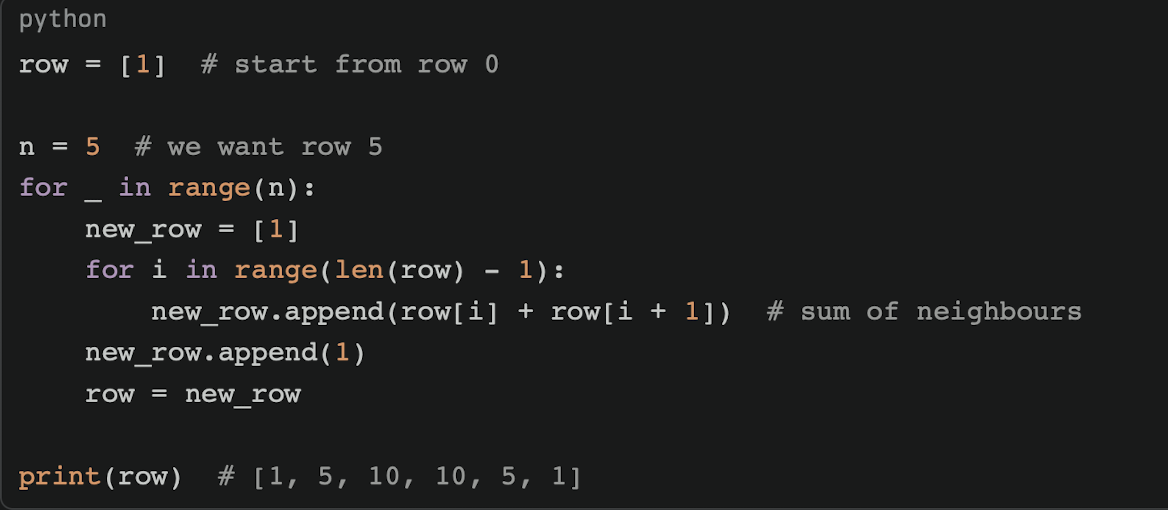
Explanation: • Each inner element is sum of two elements above it: previous row’s i and i+1 .